

RC series Helical Geared Motor
Engineered for industrial automation, our RC series helical geared motor provides 0.1–560 rpm output. Trust our helical geared motor manufacturer for precision.
View productA shortlist of three suppliers usually lands on one desk with one question attached: which of them is a genuine helical geared motor manufacturer, and which one simply buys finished gearing and bolts it into a housing? The six markers below are the ones a parallel shaft geared motor manufacturer cannot answer cheaply — alloy grade, heat treatment, grinding, published torque, documentation and configuration — and each one can be checked against the FC series sheet before a purchase order is raised.
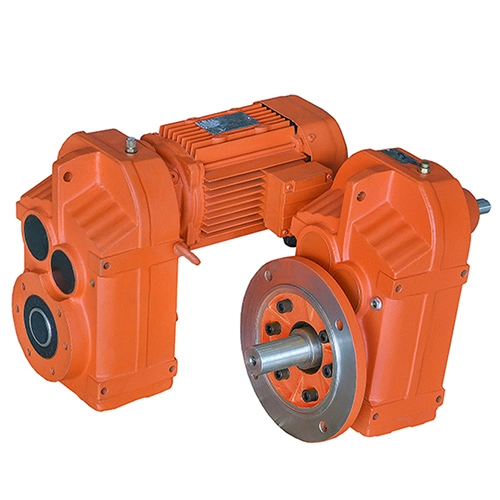
Work down the list with every shortlisted vendor. Each marker has one question worth asking, one answer that should make you cautious, and one reason it changes your decision.
Most geared motor sheets stop at "hardened and ground gears". The FC series goes further and names the steel and the hardness band, which makes it checkable. That is the first point where a shortlist separates.
What the statement proves: the vendor has committed publicly to a named alloy and a hardness window, so you can demand a measurement against both and refuse a unit that misses them.
What it does not prove: core toughness, effective case depth, retained austenite, or consistency from one heat lot to the next. Surface hardness on its own tells you very little about how a tooth behaves under shock load, because a hard case over a soft core still deforms.
"Gears in 20CrMnTi alloy steel; after tempering, carburizing, quenching and other heat treatment, the hardness can reach HRC58–62."
Grinding is then applied to the finished teeth, with precision stated as grade 6–5.
The FC series states that all gears are processed by accurate grinding, with precision reaching grade 6–5. That sentence is worth more than it looks, and it is the easiest marker to test across a shortlist — put the same question to every vendor and compare the answers, not the adjectives.
| Point of comparison | Teeth ground to grade 6–5 | Unground, as-cut teeth |
|---|---|---|
| Flank after hardening | Quench distortion is removed in a finishing pass after heat treatment | Quench distortion stays on the working flank |
| Contact across the face | Predictable contact pattern; load is spread across the tooth | High spots concentrate load on a narrow band |
| Noise at operating speed | Finely ground teeth support low noise and smooth meshing | Whine that becomes more obvious as speed rises |
| Surface durability | Finer finish resists pitting across continuous duty cycles | Rougher finish starts pitting earlier in the same duty |
| Fit for continuous heavy duty | Matches the durability claim made for the FC series gear set | Reasonable for intermittent, low-speed, light duty only |
| How to verify it | Request the gear inspection report stating the grade achieved | Ask the same question — a vague reply is the answer |
Comparison is qualitative. Confirm the grade actually achieved for your order in the inspection report rather than in the sales brochure.
The FC series sheet carries two different torque figures. The product introduction describes output torque up to 50,000 Nm. The body copy and the frame table top out at 18,000 Nm on the largest standard frame, FC157. Both numbers appear on the same page.
That gap is not unusual — oversized frames and specially engineered builds sit outside a standard frame table — but closing it is your job, not the vendor's. Before you compare prices, ask which frame and which build the headline figure belongs to, and require the permitted torque for the exact frame you are ordering in writing.
A gearbox is sized on permitted torque at the driven shaft, for the duty cycle you actually run. Two suppliers quoting the same headline number can still be quoting two different frames.
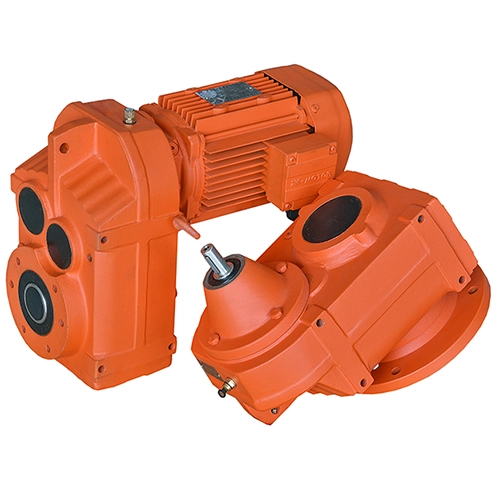
| Model | Solid shaft dia. (mm) | Centre height (mm) | Output flange dia. (mm) | Power (kW) | Ratio | Permitted torque (Nm) | Weight (kg) |
|---|---|---|---|---|---|---|---|
| FC37 | 25k6 | 30 | 70h13 | 0.12–3 | 4–138 | 180 | 13 |
| FC47 | 35k6 | 35 | 80h13 | 0.12–5.5 | 4–175 | 360 | 16.5 |
| FC57 | 35k6 | 40 | 100h13 | 0.18–7.5 | 4–197 | 420 | 27 |
| FC67 | 40k6 | 40 | 100h13 | 0.37–7.5 | 4–197 | 700 | 31 |
| FC77 | 50k6 | 50 | 120h13 | 0.75–11 | 4–197 | 1350 | 55 |
| FC87 | 60m6 | 60 | 155h13 | 1.5–22 | 4–193 | 2500 | 100 |
| FC97 | 70m6 | 70 | 180h13 | 2.2–30 | 4–203 | 3700 | 170 |
| FC107 | 90m6 | 90 | 200h13 | 3–45 | 4–205 | 6500 | 260 |
| FC127 | 100m6 | 100 | 240h13 | 5.5–90 | 4–202 | 10000 | 400 |
| FC157 | 120m6 | 120 | 270h13 | 11–160 | 4–190 | 18000 | 700 |
Selection data as published on the FC series sheet. Weights are without oil and without motor; shaft and flange input add 10%. The sheet also lists a hollow-shaft column that is blank for every frame, so it is omitted here. Confirm the figures for your build on the quotation drawing.
Ask for this file set with the quotation, not after the goods arrive. A supplier who can send the list in a day is telling you something; one who "will check with the workshop" is telling you something else.
Two units with identical gear data can differ in footprint, alignment and freight cost. The FC series offers three input forms and four mounting arrangements, and the sheet's own weight note is where freight budgets usually slip.
The FC series is listed for cranes, conveyors and ceramic machinery. Each of those duties interrogates a different column of the table.
An enquiry that arrives with the numbers below is answered with a frame, a ratio and a permitted torque. An enquiry that says "quote me an FC series" is answered with a brochure.
Send the duty data and the mounting sketch. Ask for the permitted torque of the proposed frame, the grinding grade in the inspection report, and the weight with your input configuration included.
Keep adjacent product options together for a faster catalog comparison.
Engineered for industrial automation, our RC series helical geared motor provides 0.1–560 rpm output. Trust our helical geared motor manufacturer for precision.
View product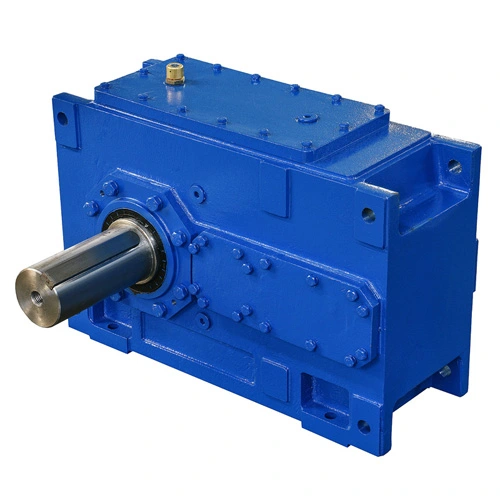
Heavy-duty parallel shaft gear unit by STLM with reinforced housing and efficient torque transfer. Backed by expert industrial gearbox manufacturers and reliable gear reducers manufacturers.
View product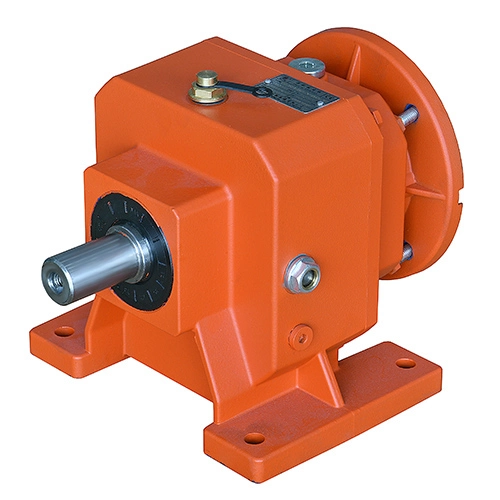
STLM planetary geared motor delivers compact size, stable torque, and long service life, trusted by global planetary gearbox manufacturers and gear reducers manufacturers.
View productThe page works from 20CrMnTi carburised and hardened to HRC58–62; ask for the gear inspection report stating the grade actually achieved.
Ground teeth remove quench distortion in a finishing pass, give a predictable contact pattern and resist pitting, while unground teeth suit intermittent low-speed light duty only.
Match permitted torque in Nm, at the ratio you need, to the duty you run — the headline power figure alone does not tell you whether the gear set survives continuous heavy duty.
The page asks for the gear inspection report, material certificate, hardness verification, run-out or noise check and a packing list showing the quantity and carton plan.
Directly connected, flange input and shaft input forms are listed, with horizontal or vertical mounting and the shipping weight given per frame size.
Duty data rather than a model number: power, output speed or ratio, load type, duty cycle, mounting position and the acceptable noise level.
